All Saints presents
Radio St. Paisios.
The public media studio of All Saints.
A working media laboratory where students learn to make media that is “true, noble, right, pure, lovely, admirable, excellent [and] praiseworthy” as a service to all (Philippians 4:8).
Why St. Paisios?
St. Paisios of Mount Athos, canonized in 2015, served in the Greek army as a radio operator. On a military line a message can decide whether people live or die, and the operator has to receive it exactly and pass it on without adding to it or losing any of it.
The Gospel deserves that seriousness. Young people who carry it should learn to listen as carefully and speak as faithfully as a soldier at a radio set.
Listen with discernment. Speak truth with love.

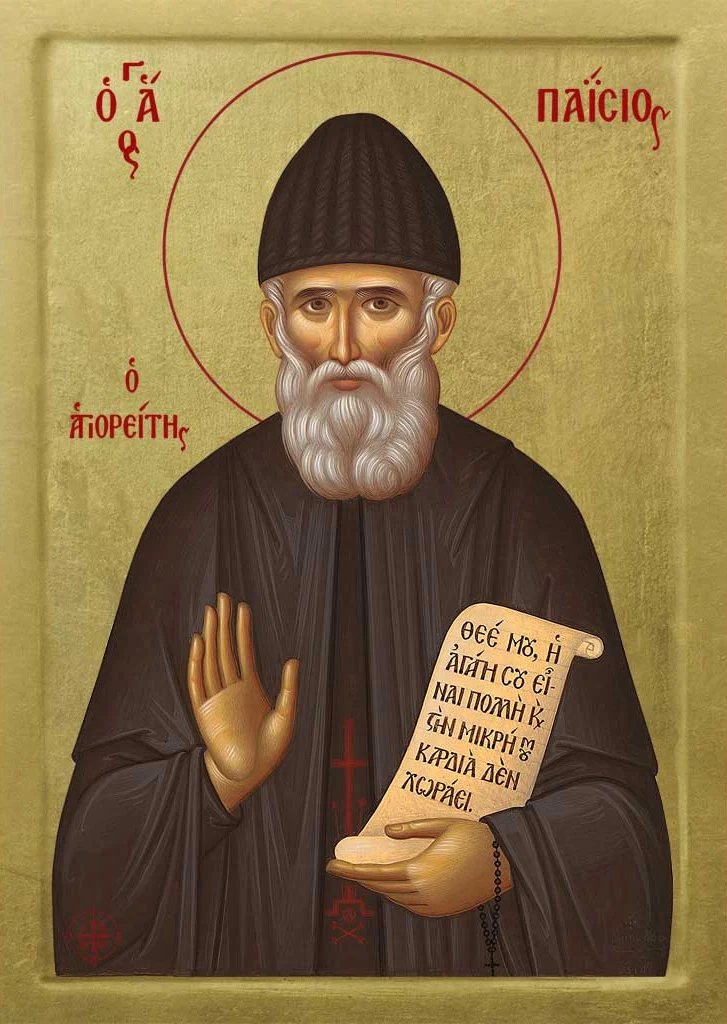

Left and right: St. Paisios during his military service. Center: icon of St. Paisios of Mount Athos, from athoniteusa.com (opens in a new tab).
Media as Battlefield for Youth
St. Paisios, pray for us. While we are not physically in a civil war, our minds, wills, and hearts are barraged and assailed daily through the onslaught of influences from our media, social media, and entertainment landscape.
Nearly half of American teenagers say they are online almost constantly, about twice the share of a decade ago (Pew Research Center, 2024). Much of what reaches them is designed to hold their attention.
At All Saints, we believe students can learn to take apart the influences, the patterns of thought, and the identities that media offers them, and to find freedom from consuming media, social media, and entertainment passively. The studio teaches them to do it by making media themselves, and it is where the school takes up larger questions with educators, Orthodox clergy, scholars, artists, and parents.
At a glance
A chronically online adolescence
46%
of U.S. teens ages 13 to 17 say they are online almost constantly.
Share of U.S. teens who use each platform, and who use it almost constantly
| Platform | Use it | Almost constantly |
|---|---|---|
| YouTube | 90% | 15% |
| TikTok | 63% | 16% |
| 61% | 12% | |
| Snapchat | 55% | 13% |
| 32% | 3% |
Nearly 40%
of children ages 8 to 12 use social media, though 13 is commonly the minimum age platforms require.
More than 3 hours
a day on social media was linked to double the risk of poor mental health outcomes, including symptoms of depression and anxiety, among adolescents ages 12 to 15.
Students learn discernment by taking media apart: understanding how to gain independence from unhealthy influences, and how to use their inner “radios” to transmit Truth.
How Students Learn
In the middle years the work is storytelling: finding a story, shaping it, and telling it so that it can be heard.
Story & Research
- Research
- Archival research
- Fact checking
- Story development
- Scriptwriting
Voice & Performance
- Interviewing
- Narration
- Oral storytelling
- Verbal projection
- Enunciation
- Public speaking
Discernment
- Media literacy
- Media ethics
- Audience awareness
- Critical consumption
Roles students take on
- Researcher
- Writer
- Host
- Interviewer
- Narrator
- Performer
- Fact Checker
- Archivist
As All Saints High opens, the studio plans a media production internship: recording, sound, camera, and editing.
Learning Inside the Work
All Saints develops Radio St. Paisios with Greek Fire Studios (opens in a new tab), a professional production studio in San Juan Capistrano. Productions are recorded and finished on their equipment, so students see how professional work comes together.
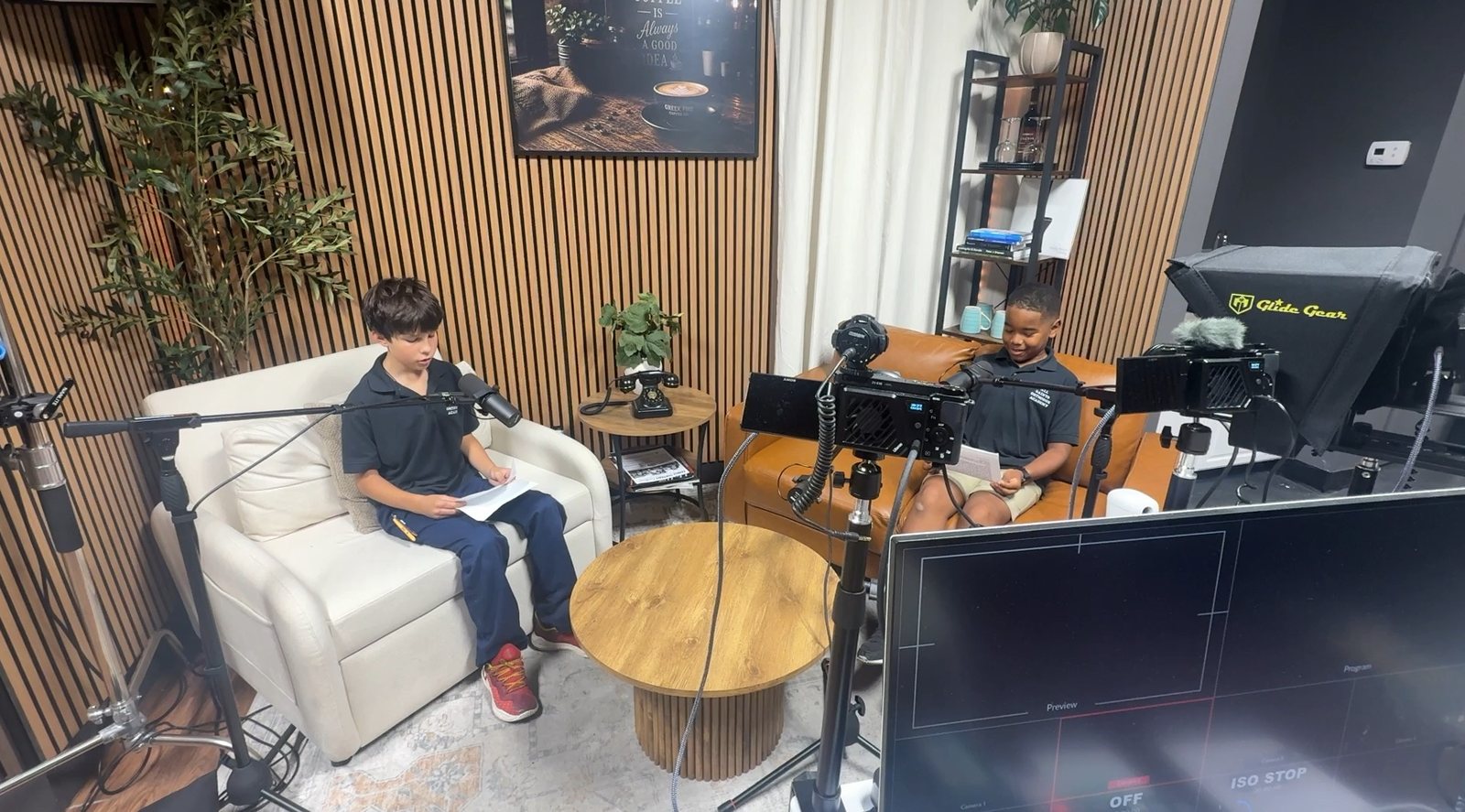


From Idea to Finished Work
Development
Ideas, research, story structure, and writing.
Pre-Production
Scripts, casting, scheduling, and rehearsal.
Production
Performance, interviews, and recording.
Post-Production
Editing, sound, music, and review.
Publication
Release to an audience.
What Making Media Teaches
Making media changes the way students take it in. Once they know how a story is shaped, framed, and delivered, they see communication more clearly.
- Who made this message?
- Who is it for?
- What is it asking me to believe, feel, or do?
- Is it true?
- Is it worthy of my attention?
- What does the person who made it owe the people who receive it?
For a Christian, these questions belong to the older discipline of discernment.
“So faith comes from hearing, and hearing by the word of Christ.”
Romans 10:17